
Champagne Food Pairing: Which Cuvée Goes With Which Dish?
Champagne is often reserved for the toast, but it is one of the most food-friendly wines there is. Its acidity refreshes the palate, its bubbles cleanse it and its range of styles, from bone-dry Brut Nature to fruity rosé, opens the door to pairings across an entire menu. This guide explains the principles behind good champagne pairings and suggests dishes for each style.
Why champagne works so well with food
- Acidity: like a squeeze of lemon, it lifts flavours and balances rich, creamy or fried foods.
- Bubbles: they scrub the palate between bites, which is why champagne is so good with salty and fatty foods.
- Moderate alcohol: around 12% abv, champagne does not overpower delicate dishes.
- Autolytic notes: time on the lees brings brioche, toast and nutty aromas that echo baked, roasted and buttery flavours.
Three simple rules
- Match weight with weight. Light, fresh champagnes for delicate dishes; fuller, older champagnes for richer food.
- Keep the wine at least as sweet as the food. A dry Brut with a sugary dessert tastes sharp. For desserts, choose rosé with fruit or a Demi-Sec.
- Salt and fat are friends; heavy spice and strong tannins are not. Champagne loves salty snacks, butter and cream, but very hot chilli can make it feel harsh.
Pairings by champagne style
Blanc de Blancs (100% Chardonnay)
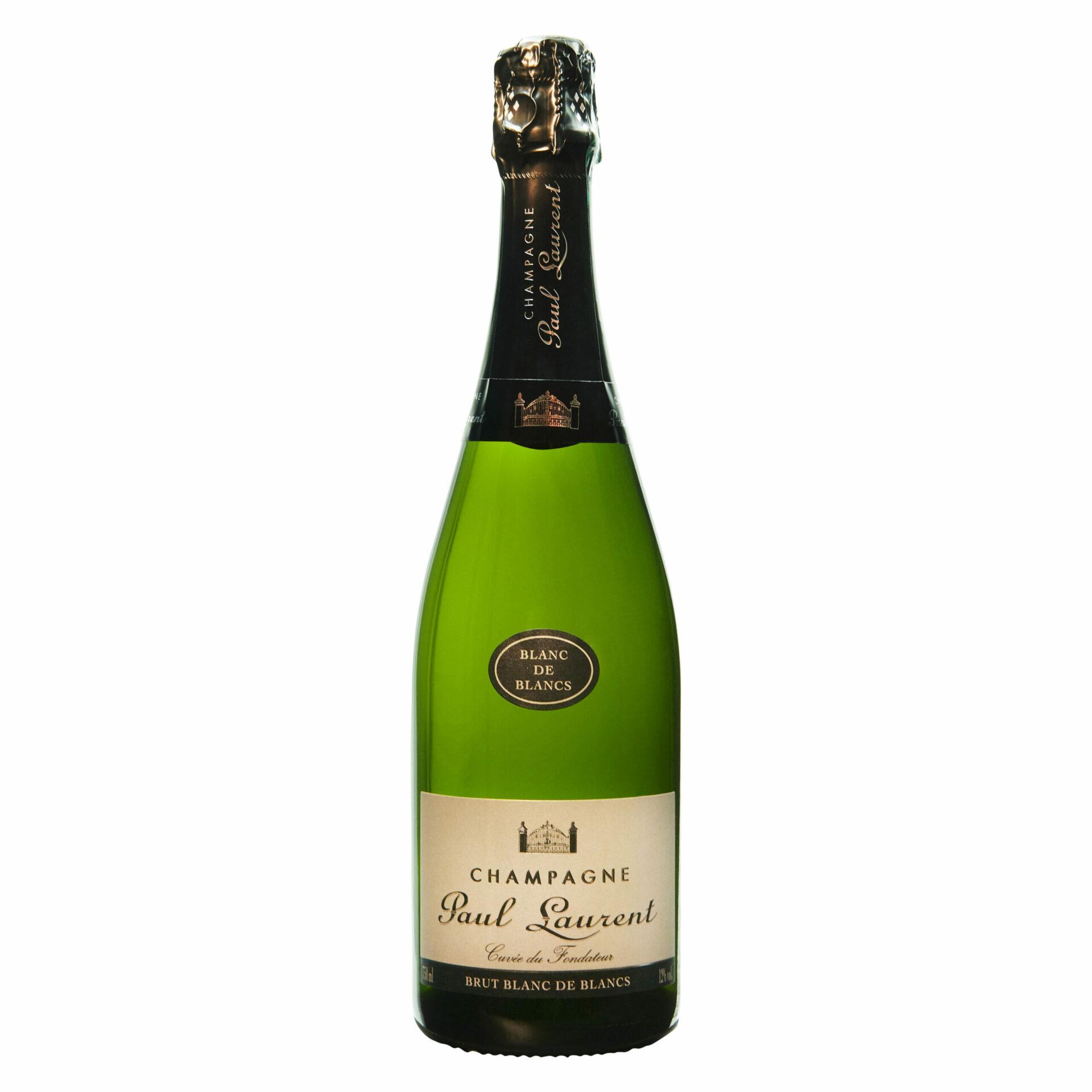
Fresh, citrusy and mineral, Blanc de Blancs is the classic partner for the sea. Try it with oysters, scallop carpaccio, sushi, langoustines, grilled sole or a goat’s cheese salad. Our Cuvée Blanc de Blancs, with its almond notes and creamy finish, also works beautifully with a lemony risotto. Read more in our Blanc de Blancs guide.
Classic Brut (Pinot Noir-led blends)
A Brut with a majority of Pinot Noir has more body and red-fruit character. It is the most versatile style: serve it with charcuterie and gougères as an aperitif, then with roast chicken, veal, mushroom dishes or a creamy pasta. Our Cuvée du Fondateur Brut (75% Pinot Noir) shows pear, citrus and dried fruit aromas and pairs with both simple and refined dishes.
Chardonnay-led blends
Blends in which Chardonnay dominates combine freshness with a little more depth. Cuvée Prestige Brut (70% Chardonnay, 30% Pinot Noir, aged two years on the lees) offers floral notes of acacia and a bright citrus palate: an excellent match for grilled fish, crab, white asparagus or a fine poultry terrine.
Balanced, mature cuvées
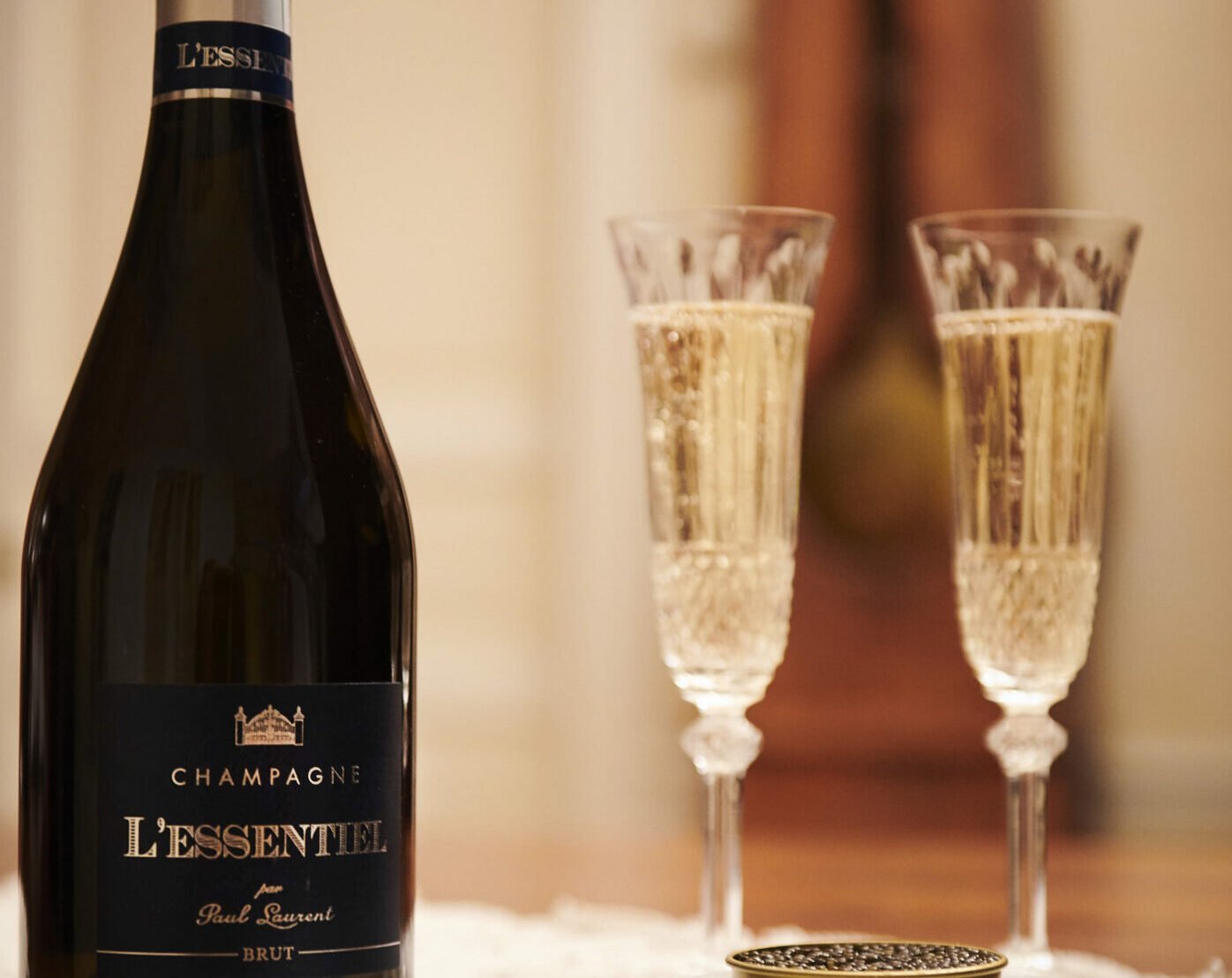
Champagnes with longer ageing develop warm, rich notes. Cuvée L’Essentiel, an even blend of Chardonnay and Pinot Noir aged three years, has notes of vanilla, citrus and candied fruit. It shines with lobster, scallops in butter, truffle dishes, aged Comté and, of course, caviar.
Brut Nature (zero dosage)
Without added sugar, Brut Nature is pure and precise. It is perfect with raw oysters, sea urchin, sashimi, tartares and simply grilled shellfish. The long-aged Cuvée Génération Brut Nature also stands up to firmer, saltier cheeses. Learn more about dryness in champagne sweetness levels explained.
Rosé champagne
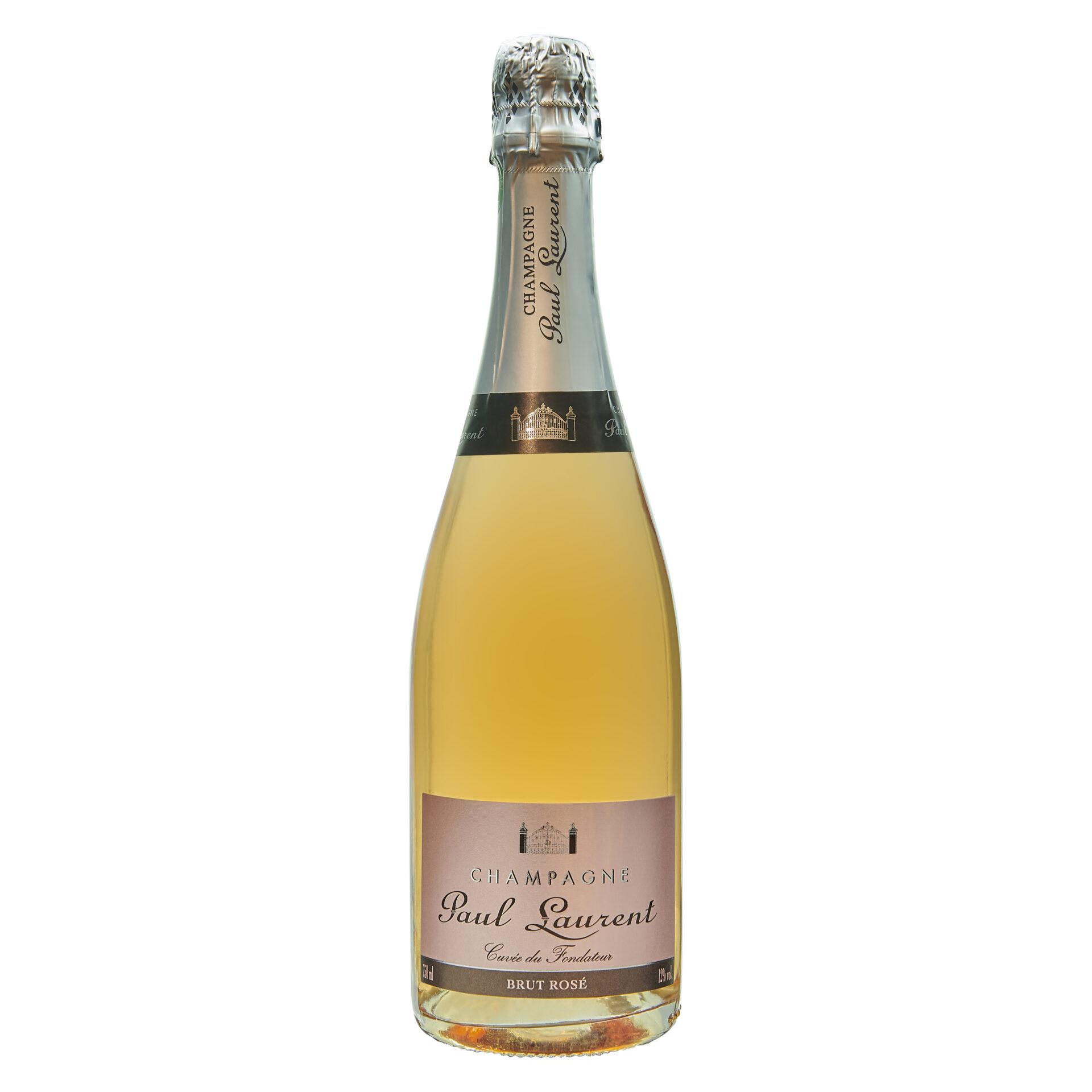
Rosé brings red-fruit aromas and a touch more structure. It pairs with salmon and tuna, duck breast, lamb, beetroot dishes and, at the end of the meal, with red-berry desserts. Our Cuvée Brut Rosé, with notes of strawberry, raspberry and currant, is lovely with a strawberry tart or a summer fruit salad. See our guide to rosé champagne.
Organic champagne with oak-aged Chardonnay
Our Cuvée BIO blends the fruitiness of Pinot Meunier with oak-aged Chardonnay. That combination of berry fruit and a creamy, slightly woody texture works well with roast pork, mushroom risotto, quiche or a creamy chicken fricassee.
Champagne through a whole menu
| Course | Ideas | Style to choose |
|---|---|---|
| Aperitif | Gougères, olives, salted nuts, crisps, smoked salmon blinis | Brut, Blanc de Blancs |
| Starter | Oysters, ceviche, scallop carpaccio, asparagus | Brut Nature, Blanc de Blancs |
| Fish course | Lobster, sole meunière, scallops in butter | Chardonnay-led or mature cuvées |
| Main course | Roast poultry, veal, duck, lamb, mushroom dishes | Pinot Noir-led Brut, rosé |
| Cheese | Comté, Parmesan, Chaource, Brie | Mature cuvées, Blanc de Blancs |
| Dessert | Red-fruit tarts, light fruit desserts | Rosé, Demi-Sec |
Surprising pairings worth trying
- Fried chicken or fish and chips: the bubbles and acidity cut through the crunch and the fat.
- Popcorn with butter and salt: a simple, joyful aperitif match.
- Parmesan shavings: their salty, nutty character echoes the notes of aged champagne.
- Mild curries and Asian dishes: choose a fruity Brut or a rosé, and keep the chilli gentle.
Pairings to approach with care
- Very sweet desserts and chocolate with a dry champagne.
- Strongly spiced or very vinegary dishes.
- Heavily smoked or very garlicky food with delicate Blanc de Blancs.
Champagne and cheese
Cheese is one of the most rewarding partners for champagne, provided you choose the right style. Fresh, young cheeses such as goat’s cheese or a soft Chaource from southern Champagne love the acidity of a Blanc de Blancs. Hard, aged cheeses like Comté, Beaufort or Parmesan, with their nutty and slightly sweet notes, are better with mature cuvées that have spent several years on the lees. Creamy bloomy-rind cheeses such as Brie work with a classic Brut, whose bubbles cut through the richness. Very strong blue cheeses and washed-rind cheeses are more difficult; if you want to try them, choose a rosé or a fuller champagne and serve small portions.
Vegetarian pairings
Champagne is a natural fit for vegetable dishes. Asparagus with a light hollandaise, a mushroom risotto, a vegetable tempura, a beetroot and goat’s cheese salad or a leek and Gruyère tart all work well. Earthy flavours such as mushrooms and truffle suit Pinot-based or mature champagnes, while green vegetables and herbs are happier with a fresh Blanc de Blancs or an Extra Brut.
Serving tips for food pairing
Serve lighter champagnes a little cooler (7–9 °C) and fuller cuvées a little warmer (10–12 °C), and use a tulip glass so the aromas can open up. If you pour several cuvées during a meal, start with the driest and lightest and finish with rosé or sweeter wines. Our guide on how to serve champagne covers the details.
Plan your menu around our cuvées. Browse the seven champagnes of Champagne Paul Laurent on Our Champagnes and contact us for advice or orders.
Conclusion
Champagne is far more than an aperitif. Match the weight of the wine to the dish, keep the wine at least as sweet as the food and let acidity and bubbles do their work with salty, creamy and crispy flavours. With a Blanc de Blancs for seafood, a Pinot-led Brut for the main course and a rosé for red-fruit desserts, you can enjoy champagne from the first bite to the last. Please drink responsibly.
Related articles
What Is Blanc de Blancs Champagne? A Guide to 100% Chardonnay Champagne
Blanc de Blancs champagne is made only from white grapes, usually Chardonnay. Learn how it tastes, how it is made, what to pair it with and how to serve it.
Rosé Champagne Explained: How It Is Made and When to Serve It
How is rosé champagne made, what does it taste like and what should you eat with it? Discover the blending and saignée methods and our tips for serving rosé.
How to Serve Champagne: Temperature, Glasses and Pouring Tips
The ideal champagne serving temperature, how long to chill a bottle, which glass to use and how to pour without losing the bubbles. A practical guide.